


 2026-11-12

一条高速公路,平均每两公里就有一对摄像机;一座千万级人口的城市,路面视频点位以万计。卡口、信号机、情报板、气象检测器、边缘计算单元……这些设备共同构成了智慧交通的“视觉神经”,也构成了运维人员面前一本不容易算清的账。
政策层面的要求正在变得具体。2026年6月,交通运输部等五部门印发《“人工智能+交通运输”典型应用场景创新行动方案》,要求依托公路既有感知设施、以“多杆合一、多感合一”提升全要素感知能力,加强夜间、雨雪天气等异常状态下的路网运行监测。安全侧同样在收紧:2025年4月起施行的《公共安全视频图像信息系统管理条例》(国务院令第799号)第十五条,要求管理单位完善防攻击、防入侵、防病毒、防篡改、防泄露等安全技术措施;自2026年10月1日起施行《公安机关网络空间安全监督检查办法》(公安部令第176号),进一步把漏洞整改、系统合规建设纳入监督检查范围。
政策指向的其实是同一件事:底数要清、状态要明、过程要可追溯。而这恰恰是当前广域道路视频运维的三件难事。

省—市—路网三级管理,跨区域、跨标段、跨厂商,设备来自不同年代、不同品牌,型号、固件、IP规划各不相同;新建路段接入、旧点位改造、临时布设的移动视频,往往落在台账之外,台账与实际一旦不符,监测、考核、防护都失去基准。道路视频的价值在于“全时可用”,故障发现却长期依赖人工巡检与外部反馈:一段视频离线几天,可能直到事故复盘才被翻出来;一次画面偏转,可能让整条路的流量统计失真。更难算的是投入产出,以万路为单位的巡检一轮下来以月计,出车、登杆、拆箱,人力成本刚性增长,考核却仍停留在“报了多少、修了多少”,服务质量的差异无从体现。
全生命周期管理
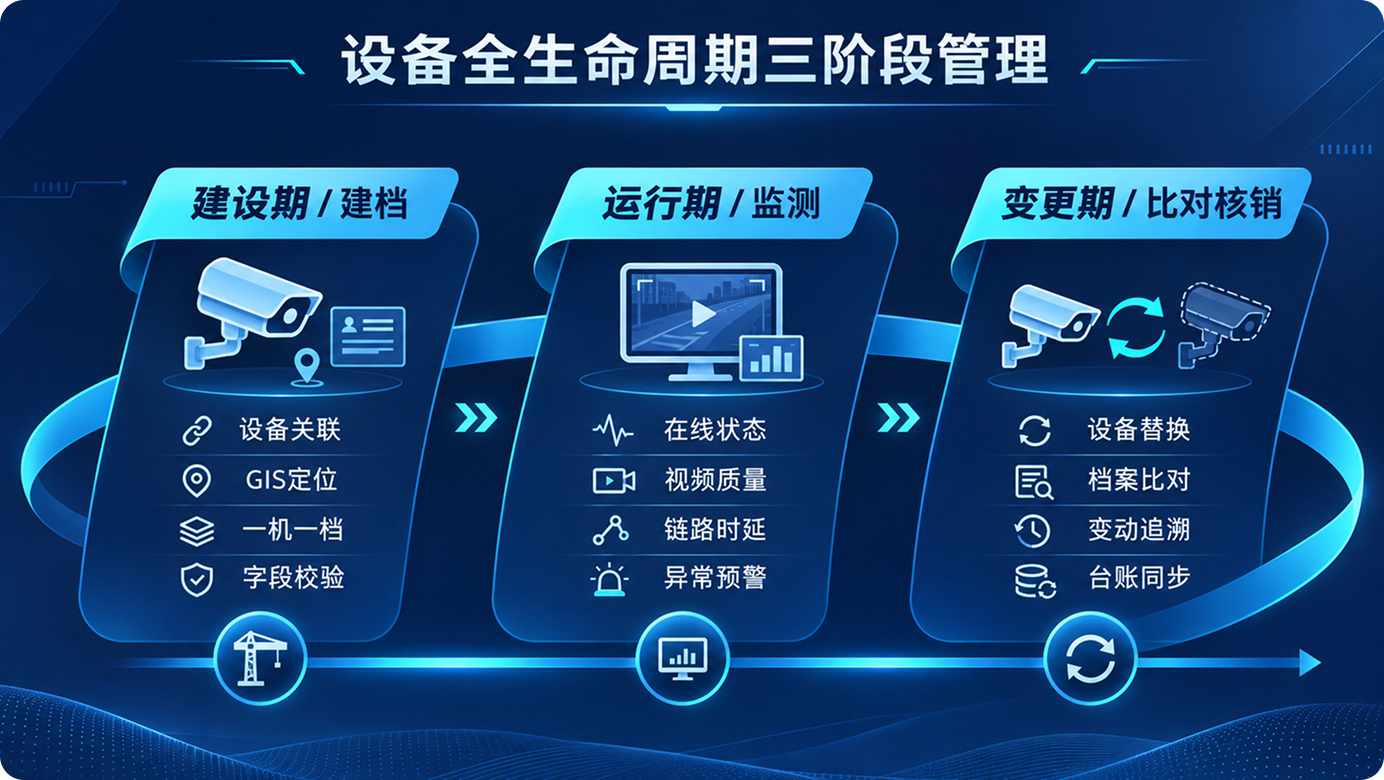
深盾安视安全运维平台把道路视频设备从上线到退役拆成三段,每段都对应明确的动作。
建设期,建档。摄像头、立杆、设备箱、交换机逐级关联,在GIS地图上落图定位,按行业“一机一档”标准完成字段填报与校验,让每个点位有坐标、有归属、有责任人。
运行期,监测。在线状态、视频质量、链路时延、同步采集;画面偏转、遮挡、模糊、花屏由算法判定并输出量化指标——不靠人眼觉得发黑,而看亮度值是否低于阈值,并给出核查建议。
变更期,比对与核销。设备被替换、被私接、被挪位,指纹与档案不一致时自动标记;设备退网则台账同步更新,让每一次变动都可追溯,也为结算与责任界定留下依据。
资产有账,故障有单,考核有据
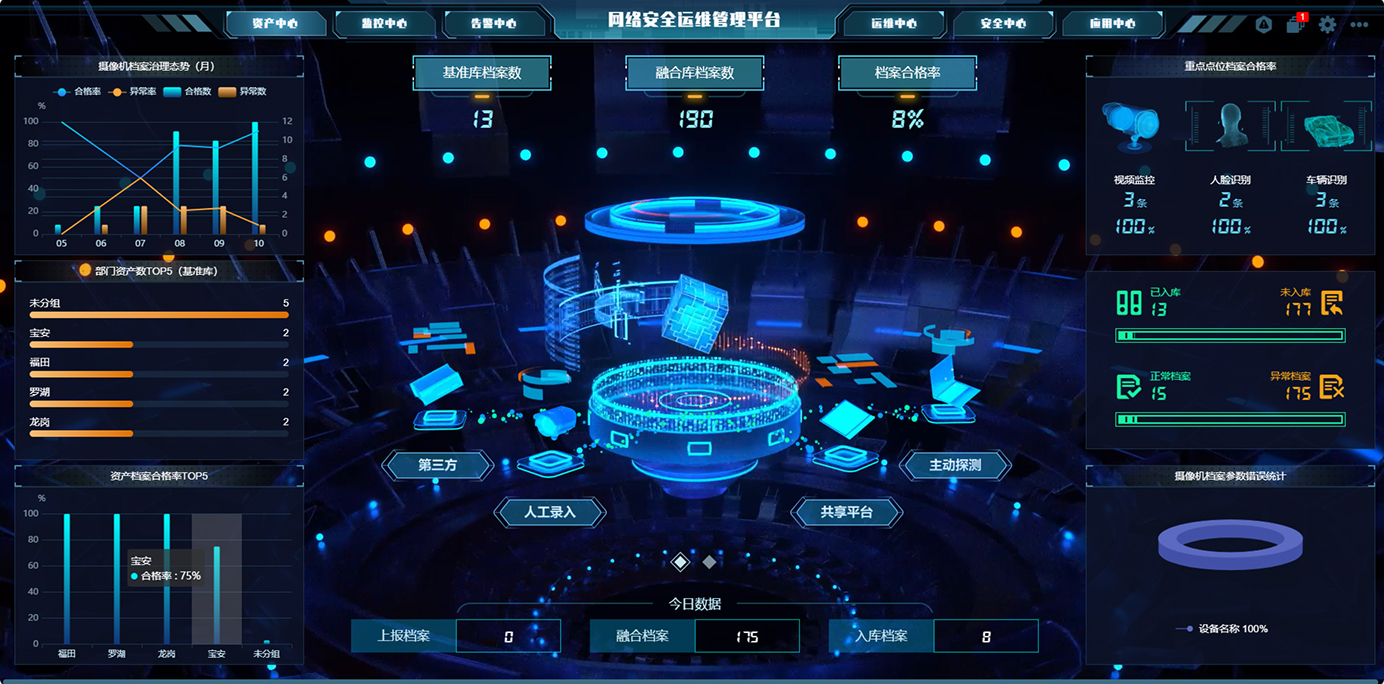
自动发现:安全运维平台以主动扫描、协议采集、流量分析、国标对接等多路并行,识别设备类型、厂商、型号与服务,自动生成动态资产清单与网络拓扑。前端摄像机采用GDPS旁路准入技术,不改变现有网络拓扑即可完成身份核验,仿冒、私接设备接入即被识别,安全管理不必以“断网改造”为代价。
统一告警:告警经聚合、降噪、根因分析后,落到GIS地图上的具体一根杆、一个设备箱,并自动派发工单;处置过程可跟踪,处置结果可回验,形成“发现—派单—处置—验证”的闭环。运维人员接到工单的第一时间,就知道是哪台设备、什么故障、在什么位置。
一本台账:资产基准库按统一标准校验字段,与行业主管部门“一机一档”系统对接;运维考核按标段、级别出具可用率、及时率、修复时长报表,以考代管,让服务质量可以被量化、被比较、被结算。
降本增效,落在四个变化上
巡检从以月计缩短到以小时计,人跑变成了数据跑;故障不再等人报修,系统自动告警,在影响业务之前就被看见;出车先定位、再出发,少跑空趟;结算凭报表,不再凭印象,运维费用花在哪里,一目了然。更进一步,是安全与运维的合流。《公共安全视频图像信息系统管理条例》把“防攻击、防入侵、防篡改、防泄露、防病毒”写进了管理单位的义务,而视频专网的安全风险往往就藏在运维的盲区里:一台离线三个月的摄像机、一个仍在用默认口令的NVR、一条违规外联的链路。当资产台账、运行状态、安全事件呈现在同一张图上,“安全+运维”才不是一个口号,而是一套可以运转的机制。
先管得住日常,才查得清风险
日常监测能回答“设备在不在、好不好”,却回答不了“设备安不安全”。道路沿线的摄像机常年无人值守,初始口令、弱口令、多年未打补丁的漏洞,往往要等上级通报才被翻出来。
视频监控安全检查平台做的正是这一步:预置超过2000条视频网设备专属资产指纹,一键下发任务,完成资产盘点、弱口令检测、漏洞发现与配置核查,出具可直接用于整改报送的报告。这一步与监管方式也对得上——公安部令第176号明确,设区的市级以上公安机关可以通过漏洞探测、渗透性测试等方式,对本辖区范围内关键信息基础设施以外的网络设施、信息系统进行远程检测。检查重点之一就是“是否针对网络安全漏洞、隐患采取相应的整改措施”。与其等人来扫,不如先自己扫一遍。对运维单位,这是从被动等通报转为主动自查;对管理单位,这是把条例第十五条与176号令的要求落到一张可核查的台账上。
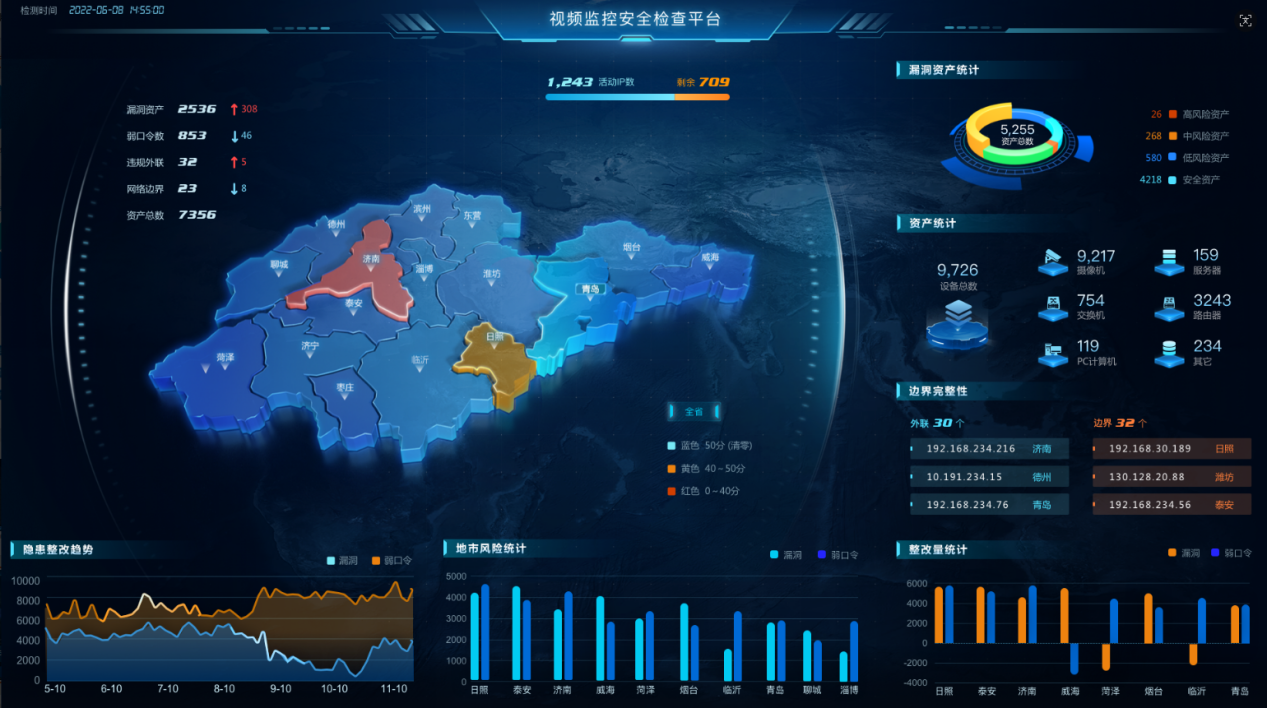
一条链由此闭合:安全运维平台管“日常”,视频监控安全检查平台管“定期”;前者回答“在不在、好不好”,后者回答“安不安全”。监测发现问题,体检确认风险,再回到工单闭环——视频专网运维才算完整。
智慧交通的上半场是把每一段路看见;下半场是把这张网管住、算清。深盾安视视域运维以省—市—路网三级部署,覆盖高速公路、城市道路、国省干道与重点路口路段,让每一路视频都有档案、每一次故障都有响应、每一笔投入都有回音。路网在延伸,运维这本账,也该算得清了。
On an expressway, there is a pair of cameras every two kilometers on average. In a city with a population of tens of millions, road-side video points are counted in tens of thousands. Checkpoints, traffic signal controllers, variable message signs, weather detectors, edge computing units… These devices jointly form the "visual nerve" of smart transportation, and also create a complicated account for operation and maintenance personnel.
Policy requirements are becoming more concrete. In June 2026, the Ministry of Transport and four other authorities issued the Action Plan for Innovation of Typical Application Scenarios of "AI + Transportation". It requires leveraging existing highway sensing facilities, adopting "integrated poles and integrated sensors" to improve full-element perception capability, and strengthening road network monitoring under abnormal conditions such as nighttime, rain and snow. Security requirements are also tightening. Article 15 of the Regulations on the Administration of Public Security Video and Image Information Systems (Decree No. 799 of the State Council), effective April 2025, obliges management entities to implement security technical measures against attacks, intrusions, viruses, tampering and information leakage. The Measures for the Cyberspace Security Supervision and Inspection of Public Security Organs (Decree No. 176 of the Ministry of Public Security), effective October 1, 2026, further incorporates vulnerability remediation and system compliance development into supervision and inspection.
All these policies target the same goal: clear asset inventory, transparent operating status and traceable processes. These are exactly the three major challenges for wide-area road video operation and maintenance today.

Managed at provincial, municipal and road network levels, devices span different regions, contract sections and vendors. They come from different eras and brands with varied models, firmware versions and IP plans. New road access, reconstruction of old points and temporarily deployed mobile video devices are often excluded from asset ledgers. Once ledgers deviate from reality, monitoring, assessment and protection lose their benchmarks. The value of road video lies in "24/7 availability", yet fault detection has long relied on manual patrols and external reports. A video stream may stay offline for days until reviewed in accident post-analysis; a tilted camera may distort traffic statistics for the whole road. Return on investment is even harder to calculate. Patrols covering tens of thousands of video channels take months to complete. Site visits, pole climbing and cabinet opening push up labor costs steadily, while assessments only focus on the number of reported and fixed faults, with no way to differentiate service quality.
ull Lifecycle Management
The Shendun Anshi Security O&M Platform divides the lifecycle of road video devices from launch to decommissioning into three phases, each with defined workflows.
Construction phase: file establishment. Cameras, poles, equipment cabinets and switches are associated hierarchically and geolocated on the GIS map. Information fields are filled and verified in line with the industry "one device, one file" standard, so every point has coordinates, affiliation and responsible personnel.
Operation phase: monitoring. Online status, video quality and link latency are collected synchronously. Algorithms identify tilted, blocked, blurry and distorted video frames and output quantitative metrics. Instead of subjective judgment of dark images, the system checks whether brightness falls below thresholds and generates inspection recommendations.
Change phase: comparison and write-off. The system automatically flags mismatches between device fingerprints and archived records when devices are replaced, privately connected or relocated. Ledgers are updated synchronously upon decommissioning. Every change is traceable, providing evidence for settlement and responsibility identification.

Assets recorded, faults ticketed, assessments evidenced
Automatic discovery: The security O&M platform adopts parallel methods including active scanning, protocol collection, traffic analysis and national standard docking to identify device type, vendor, model and services, and automatically generate dynamic asset lists and network topology. Front-end cameras apply GDPS bypass access control technology. Identity verification can be completed without altering the existing network topology. Counterfeit and privately-connected devices are detected immediately upon access, so security management does not require network shutdown and reconstruction.
Unified alarms: After aggregation, noise reduction and root cause analysis, alarms are pinned to specific poles and cabinets on the GIS map, and work orders are generated automatically. The handling process is trackable and results verifiable, forming a closed loop of "detection – dispatching – handling – verification". O&M staff can immediately know which device is faulty, what the fault is and where it is located upon receiving work orders.
Unified ledger: The asset baseline library verifies fields under unified standards and interconnects with the "one device, one file" system of competent authorities. O&M assessments generate reports on availability, response timeliness and repair duration by contract section and administrative level. Management by assessment enables service quality to be quantified, compared and settled.

Cost reduction and efficiency improvement reflected in four transformations
Patrol cycles are shortened from months to hours, shifting from on-site inspections to data-driven monitoring. Faults trigger automatic alerts instead of waiting for user reports, so risks are identified before disrupting services. Site visits start with precise positioning to reduce empty trips. Settlement is based on reports rather than subjective impressions, with full visibility of O&M spending. Furthermore, security and O&M are integrated. The Regulations on the Administration of Public Security Video and Image Information Systems mandates management entities to guard against attacks, intrusions, tampering, leakage and viruses. Security risks of private video networks often hide in O&M blind spots: a camera offline for three months, an NVR still using default passwords, or an illegally external-connected link. When asset ledgers, operating status and security incidents are displayed on one unified dashboard, "security plus O&M" becomes a practical operable mechanism rather than a slogan.
Stable daily management lays the foundation for clear risk assessment
Daily monitoring answers whether devices are online and functioning well, but not whether they are secure. Roadside cameras are unattended year-round. Default passwords, weak credentials and unpatched vulnerabilities often remain undiscovered until notified by superior authorities.
This is exactly what the Video Surveillance Security Inspection Platform delivers. It preloads over 2,000 exclusive asset fingerprints for video network devices. One-click tasks support asset inventory, weak password detection, vulnerability scanning and configuration audit, generating reports ready for rectification submission. This aligns with regulatory requirements. Decree No.176 of the Ministry of Public Security clarifies that public security organs at prefecture-level cities and above may conduct remote detection on network facilities and information systems (excluding critical information infrastructure) within their jurisdiction via vulnerability scanning and penetration testing. A key inspection focus is whether rectification measures have been taken for cybersecurity vulnerabilities and hidden dangers. Self-inspection is preferable to waiting for external audits. For O&M vendors, it shifts the mode from passive notification to active self-check. For management authorities, it translates the requirements of Article 15 of the Regulations and Decree No.176 into a verifiable ledger.
The whole workflow is thus closed: the security O&M platform handles daily operations, while the video surveillance security inspection platform undertakes periodic audits. The former confirms online status and functionality; the latter verifies security posture. Problems detected by monitoring, risks confirmed by security audits, and closed-loop work orders constitute complete O&M for private video networks.
The first phase of smart transportation focused on visualizing every road segment; the second phase is about governing and accounting for this network. Deployed at provincial, municipal and road network levels, Shendun Anshi Vision O&M covers expressways, urban roads, national and provincial highways and key intersections. It ensures every video stream has a file, every fault gets a response, and every investment delivers traceable outcomes. As road networks expand, the O&M account deserves to be fully clarified.

