


 2026-11-19

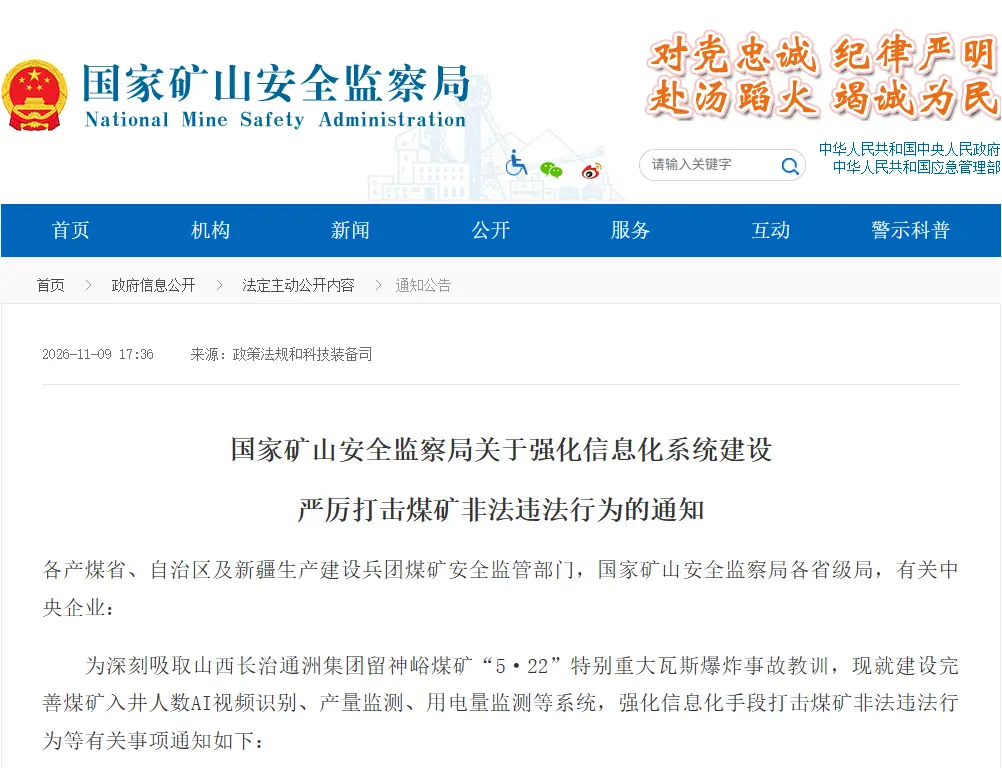
2026年11月9日,国家矿山安全监察局官网发出《国家矿山安全监察局关于强化信息化系统建设严厉打击煤矿非法违法行为的通知》,要求全国所有生产、建设(二期工程完工)井工煤矿,在2027年6月底前,完成煤矿入井人数AI视频识别、产量监测、用电量监测等系统建设,并将相关数据联网上传至国家矿山安全风险监测预警系统。
多数人看到的是“装摄像头、装电表、上平台”。但把通知读完,会发现它反复强调的不是“建了多少套”,而是同一句话:确保上传数据真实、完整、准确。这句话背后,还有一句更重的话——“严禁篡改、删除、伪造数据”。
为什么把话说得这么重?因为这套系统要打的,从来不是外敌。煤矿的非法违法行为——超能力生产、明停暗开、隐蔽工作面、入井人员不带定位卡,没有一样是黑客从外面攻进来干的。它们多数是内部人动的手脚:改个数、关个表、删段录像、换台设备。外部攻击当然要防,但更值得警惕的,是握着账号和权限的内部人员,他们绕的不是防火墙,而是规则。
所以这套系统真正的安全难点,不在抵御外部入侵,而在管住内部的人、留下操作的证据。这也决定了能对上通知要求的是管得住、看得清、追得到这一侧的能力。
别只盯着装摄像头,还要看摄像头靠不靠谱
煤矿入井人数AI视频识别系统,本质是靠视频来计数、靠视频来留证的系统,人进没进井,看画面;出了事调什么,看录像。所以通知对摄像仪的要求比想象中细得多:它不但要求系统具备摄像仪防挪移、视频质量检测(包括模糊、遮挡、黑屏、污损等)、视频回放及联网上传、报警处置等功能,要求AI视频识别人数准确率不低于95%、视频存储时长不少于1个月,人员计数、报警视频等其他数据存储时长不少于1年。还要求数据联网上传时确保上传数据真实、完整、准确,相关视频可以正常调阅。
把这些要求合起来看,其实是一句话:视频要能用来计数、能用来留证,前提是那台摄像仪本身得是真的、在线的、没被动手脚的。反过来想,摄像头一旦被挪移、被遮挡、被换掉了,人数就会数不准,出了事录像也调不出个所以然。这就引出一个大多数人会忽略的问题:摄像仪的运行状态,谁来盯?
三道口子,对应三类人
数据从井下采集,到本地平台,再到上传省局、国家平台,一路上要经过三道口子。每一道口子,都对应一类能动手脚的人。
第一道:谁在接这张网。采集终端、监控平台、运维终端都挂在一张网上。如果随便一台电脑、一个私接路由都能连进来,那“数据从哪来的、谁改的”就说不清。通知要求“确保上传数据真实、完整、准确”,前提是先管住谁能接入这张网、以什么身份接入。
第二道:谁在看、在拍、在录。煤矿的数据里,视频和图像占了相当大一块——井口的人像、作业面的画面、报警录像,都是监管要调阅、要留证的对象。画面一旦被人用手机拍下来、录屏带走,数据就失控了。通知里的“防篡改”落到视频上,就是“谁看过、谁带走过,要查得到”。
第三道:谁在导出、在改动。产量数据、用电量数据要上传,视频要调阅、导出。每一次导出、每一次改动,如果没记录、没审批,出了事就是一笔糊涂账。通知里“严禁篡改、删除、伪造数据”,靠的不是喊话,而是每一笔操作都留得下痕。
一套体系,管住边界、数据与资产
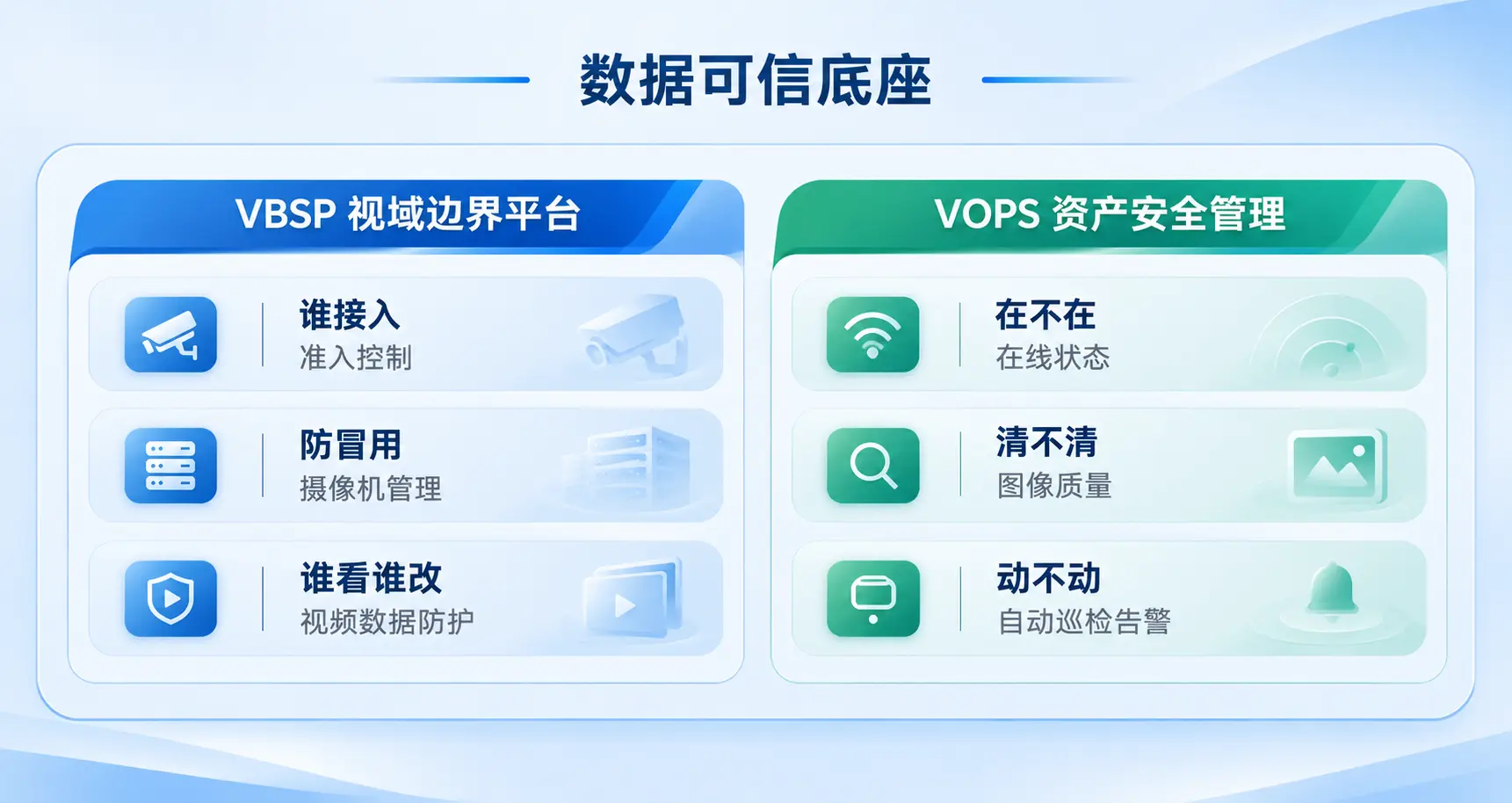
深盾安视视域边界安全管理平台(VBSP)是一个一体化融合平台,集成了网络接入控制、视频安全接入控制、视频数据安全访问控制三类能力,把资产探测、准入控制、终端安全管理、摄像机管理、视频数据防护、监控告警、安全防护等能力集成在一个平台里,单一平台即可满足视频网边界安全管理需求,一套系统就能同时覆盖准入、摄像机管理、视频数据防护:
准入控制:不依赖交换机、不改变网络拓扑,终端入网先过身份认证与安全测评,不合规的不放行;私接路由、违规外联实时探测、即时告警,必要时直接锁屏、关机。把“谁能靠近这张网”先收口。
摄像机管理:这是煤矿场景里最该被重视的一项。摄像头部署在井口、作业面等分散点位,正是“恶意替换、私接冒用、设备被盗”的高发区,非授权人员用一台计算机替换掉前端摄像头,就能从边界内部开一个洞。视域边界安全管理平台通过主动探测与被动协议分析,识别每台设备的类型、IP、MAC、厂商、物理位置与入网状态,使用DNA特征检测防止设备被电脑冒用接入,冒用、替换、私接在前端就被拦下。
视频数据防护:在线浏览自动叠加含部门、账号、IP、MAC、时间的水印,偷拍、录屏之后凭水印定位到人和设备;外发、导出走审批,可设密码、打开次数、使用期限;操作人、时间、IP、MAC、操作内容全程记录,调用、下载、回放行为逐一审计。谁在什么时候动了什么,翻得出、对得上、追得到。
摄像头的运行状态,谁来盯?
一台摄像头被动手脚,不外乎两种:要么离线(断电、拔线、断开传输),人从网络这边已经够不着它;要么画面不对(被挪了角度、遮挡、黑屏、污损)。深盾安视的网络信息资产安全管理系统(VOPS)做的就是把通知里“摄像仪防挪移、视频质量检测、报警处置”这几件事,从“靠人盯”变成“系统自动盯”。
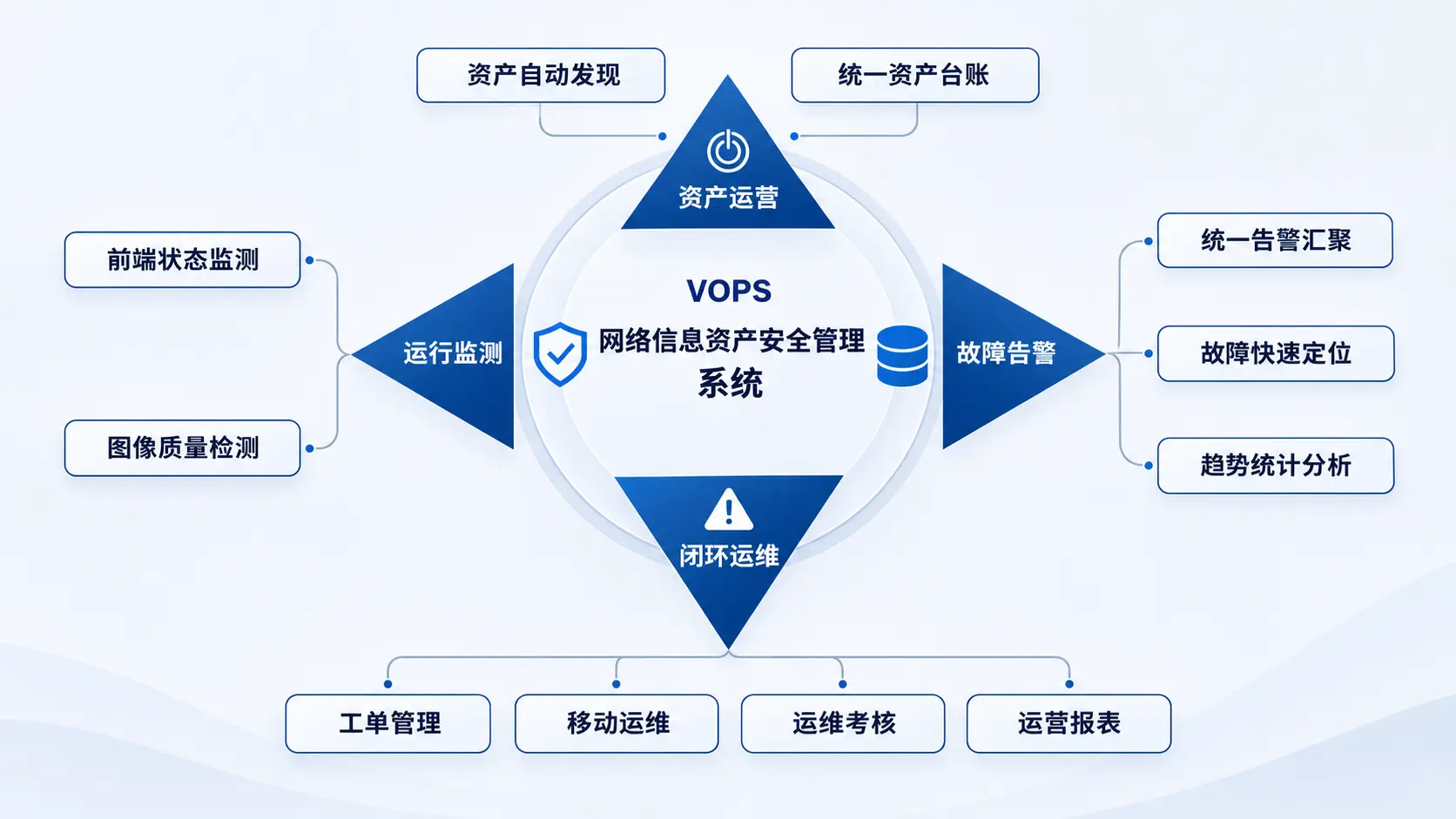
它实时盯着前端摄像头的连通性和在线状态,码流延迟、信令延迟、电源通断(配套智能电箱时)都看在眼里,什么时候离线、离线多久、恢复了没有,都记录在案,摄像头一旦被拔掉、断电、断开传输,第一时间就告警。
同时,它对画面做自动巡检,信号丢失、视频遮挡、图像偏色、视频模糊、场景变更、视频干扰、画面过亮、过暗、黑白这些异常都诊断得出来,通知点名的“模糊、遮挡、黑屏、污损”自然在范围之内,摄像头被人挪了位置、转了角度,画面里的场景变更和遮挡会立刻暴露,“防挪移”这件事,正是靠画面这一头来覆盖的。这样一来,摄像头的在不在、动不动、清不清,就不用再靠人一趟一趟去现场看,系统自己盯着、自己巡检、自己告警;等出了事才发现摄像头早被动了手脚的情况,也就不该再发生。
2027年6月,是一个硬节点
通知给出的完成时间是2027年6月底前。这个节点卡的不只是摄像头和电表装没装齐,更是数据上传上去之后,监管查起来时你能不能说得清几件事:数据是谁采的、谁上传的?上传之前有没有被人动过?动了能不能查出来是谁?用来计数的那几路视频,摄像仪还在不在原处、画面还清不清楚?这些问题的答案,都要从一套可信的底座里找。
深盾安视聚焦的是数据在使用和流转过程中的可信:让每一次接入都经过准入,让每一台摄像仪都被盯着,让每一次查看都带上水印,让每一次改动都留下记录。这条线补实了,“真实、完整、准确”才有落点。
结语
这些系统建起来只是第一步,真正决定这套机制能不能立住的,是数据在流转过程中可信不可信。先把“谁在用、谁在动、查得到谁、摄像头还在不在岗”这条底座打好,守住几道口,守的是数据背后的那条责任线。
On November 9, 2026, the official website of the National Mine Safety Administration issued the Circular on Strengthening the Construction of Information Systems and Severely Cracking Down on Illegal Acts in Coal Mines. It requires all operating and constructing underground coal mines (with completion of Phase II works) nationwide to finish the deployment of AI video recognition systems for underground personnel counting, output monitoring systems and power consumption monitoring systems by the end of June 2027, and upload relevant data to the National Mine Safety Risk Monitoring and Early Warning System via network.

Most people only notice requirements such as installing cameras, electric meters and connecting to platforms. However, a full reading of the circular reveals that its repeated emphasis is not on the quantity of deployed systems, but on one core requirement: ensuring uploaded data is authentic, complete and accurate. Behind this requirement lies a stricter rule: tampering, deletion and falsification of data are strictly prohibited.
Why is such strong wording adopted? The systems are not designed mainly to defend against external attackers. Illegal acts in coal mines, including overcapacity production, covert production under the guise of shutdown, hidden working faces and underground workers entering mines without location cards, are rarely caused by external hackers. Most are manipulated by internal personnel: altering figures, shutting down meters, deleting video clips or replacing devices. External attacks certainly need defense, yet internal staff with accounts and permissions pose greater risks. They bypass not firewalls, but management rules.
Therefore, the real security challenge of these systems lies not in resisting external intrusions, but in managing internal personnel and retaining operation logs. This also defines the core capabilities required to meet the circular’s requirements: controllable access, transparent monitoring and traceable operations.
Do Not Only Focus on Camera Deployment; Verify Camera Reliability
Essentially, the AI video recognition system for underground personnel counting relies on video footage for counting and evidence retention. Footage records who enters the mine, and videos serve as evidence for incident investigations. Accordingly, the circular sets far more detailed specifications for cameras than expected. The system must support camera anti-displacement, video quality inspection (blurriness, occlusion, black screen, contamination, etc.), video playback, network upload and alarm handling. The AI personnel counting accuracy shall reach no less than 95%, video storage duration shall be at least one month, and other data including personnel counting records and alarm videos shall be stored for no less than one year. It also mandates that uploaded data remain authentic, complete and accurate, and relevant videos be accessible for normal review.
Combined, these requirements boil down to one point: for videos to be usable for counting and evidence, the cameras must be legitimate, online and free from tampering. By contrast, if cameras are displaced, covered or replaced, counting results will be inaccurate, and valid footage will be unavailable when incidents occur. This raises a widely overlooked question: who monitors the running status of cameras?
Three Access Points for Three Groups of Operators
Data flows from underground collection terminals to local platforms, then to provincial and national platforms through three access points. Each point corresponds to a group of personnel capable of tampering.
First: Who can access the network. Collection terminals, monitoring platforms and operation terminals are connected to the same network. If unauthorized computers or privately connected routers can join freely, it will be impossible to trace data sources and tamper perpetrators. To guarantee authentic, complete and accurate uploaded data, access identities and permissions must be controlled first.
Second: Who views, captures and records footage. Videos and images account for a large share of coal mine data, including portal portraits, working-face footage and alarm clips required by regulators for review and evidence retention. Data will get out of control if footage is photographed or screen-recorded via mobile phones. For videos, the anti-tampering requirement means all viewers and exporters can be traced.
Third: Who exports and modifies data. Output data, power consumption data and videos need to be uploaded, reviewed and exported. Without logs and approval records for every export and modification, it will be impossible to clarify liabilities after incidents. The ban on data tampering, deletion and falsification relies on immutable operation audit trails instead of verbal warnings.

One Integrated System to Manage Boundaries, Data and Assets
The Shendun Anshi Vision Boundary Security Platform (VBSP) is an integrated converged platform integrating network access control, video security access control and secure video data access control. It consolidates asset detection, admission control, terminal security management, camera management, video data protection, monitoring alarms and security defense on one platform. A single platform can satisfy boundary security management requirements of video networks, covering access control, camera management and video data protection simultaneously:
Access Control: It works independent of switches and requires no network topology changes. Terminals must complete identity authentication and security assessment before access; non-compliant terminals are denied access. Privately connected routers and illegal external connections are detected in real time with immediate alarms, and devices can be locked or shut down when necessary to restrict unauthorized personnel from accessing the network.
Camera Management: This is the most critical capability for coal mine scenarios. Cameras deployed at scattered sites such as mine portals and working faces are vulnerable to malicious replacement, unauthorized impersonation and theft. Unauthorized personnel can create internal security breaches by replacing front-end cameras with computers. Through active detection and passive protocol analysis, the platform identifies device type, IP address, MAC address, manufacturer, physical location and online status of every device. DNA feature detection prevents computers from impersonating cameras, blocking impersonation, replacement and unauthorized access at the front end.
Video Data Protection: Watermarks including department, account, IP, MAC address and timestamp are automatically embedded during online viewing, enabling personnel and device tracing even if footage is secretly photographed or screen-recorded. External sharing and export require approval, with configurable passwords, view limits and valid periods. Operators, timestamps, IP, MAC and operation details are fully logged, and all access, download and playback actions are audited for complete traceability.
Who Monitors Camera Operating Status?
Camera tampering falls into two categories: offline status (power cut, cable disconnection, transmission interruption) and abnormal footage (displaced angle, occlusion, black screen, contamination). The Shendun Anshi Network Information Asset Security Management System (VOPS) automates camera anti-displacement, video quality inspection and alarm handling specified in the circular, replacing manual inspection with automatic system monitoring.

It monitors connectivity and online status of front-end cameras in real time, tracking stream latency, signaling latency and power status (when integrated with smart electric boxes). All offline records including start time, duration and recovery time are logged. Alarms trigger immediately once cameras are unplugged, powered off or disconnected.
Meanwhile, it conducts automatic footage inspection to detect anomalies including signal loss, occlusion, color cast, blurriness, scene change, interference, overexposure, underexposure and monochrome distortion. The blurriness, occlusion, black screen and contamination specified in the circular are fully covered. Displacement or angle adjustment of cameras will trigger alarms via scene changes and occlusion detection. Instead of frequent on-site manual checks, the system automatically monitors, inspects and alerts. It prevents scenarios where camera tampering is only discovered after incidents.
June 2027 is a Hard Deadline
The deadline set by the circular is the end of June 2027. This deadline is not merely for completing camera and meter installation. More importantly, when regulators audit uploaded data, enterprises must be able to answer critical questions: who collected and uploaded the data? Was the data tampered with before upload? Can the perpetrator be traced if tampering occurs? Are the counting cameras still in place with usable footage? Answers rely on a trusted underlying security foundation.
Shendun Anshi focuses on data trustworthiness throughout usage and circulation. It enforces access authentication for every connection, continuous monitoring of every camera, watermark embedding for every view and audit logs for every modification. With this foundation in place, the requirement of authentic, complete and accurate data can be practically fulfilled.
Conclusion
Deployment of the three mandatory systems is only the first step. The sustainability of the whole mechanism hinges on data trustworthiness during circulation. Building a solid foundation to clarify who accesses data, who modifies data, trace operators and verify camera status safeguards the accountability behind monitoring data.

